Working with Wild horses

A question I often get is …. “What is a good method to use for training and working with wild or abused horses?” Well … Here is the “magic” answer!

I have been working with wild mustangs and working with equine rescues for many years. As you might suspect, wild and/or abused or neglected horses can be a real challenge.

Anytime you’re working with any horse, you should always keep in mind the history of the horse if known. As a trainer, this gives you a better insight and will help you understand why the horse may be behaving a certain way. Unfortunately, trainers rarely get accurate information on a given horses’ background….. So, what’s a poor trainer to do?

The “magic” answer is, (drum roll…) There is no magic answer!! Crystal balls and Pixie dust just doesn’t work!

My method to work with a Mustang, or an abused horse is no different than working with any other horse! If you learn how to be FAIR to EVERY horse you work with, then you will have success with EVERY horse.

So … how do you be fair? Here’s how….
Wild Mustangs
Working with wild Mustangs

There are five things every horse deserves from you as a trainer, rider or handler;

Patience – If you suck in this category, go take up basket weaving until you get better. This is the most important quality a trainer must have! The moment you get frustrated or angry, you have lost your ability to effectively communicate with your horse.

Consistency – Speak the same language all the time! Get disciplined with your body language so your horse will learn to understand you! Established a set of rules and stay with them 100% of the time.

Timing & Feel – This coincides with Pressure & Release. Understand when to apply pressure, when to release the pressure and how much pressure to apply etc. Timing & feel is essential to communicating fairly with your horse.

Dedication – Your horse deserves to be treated fairly! As a trainer, rider or handler, you owe it to your horse to educate and dedicate yourself to understanding how your horse thinks and what your horse is feeling. Are they trying to be dominate? Are they fearful? Learn how to effectively communicate with your horse.

Patience, Consistency, Timing / Feel and Dedication….. Arming yourself with these tools along with hard work and quality time with your horse will give you the best chance in making that wild Mustang you have into a great partner!

(Learn more?)

Respect – Focus – Trust!

Develop a working relationship with your horse using Respect , Focus and Trust!

Before you can begin any serious training with your horse, you must first develop a positive relationship. As with any relationship, Respect, Focus and Trust are the key component!.

Welcome to The Ranch! Wild Mustangs
Develop a Good Relationship First!

Anyone who has spent any time with me training horses knows my primary philosophy….. develop the relationship first! Most trainers only provide you with training methods, i.e. how to flex, how to side pass, how to trailer load etc. Very few provide components that, in my view, are the most critical. Let’s break this down……

Respect – If the horse hasn’t learned to respect you, not only does this create an unsafe environment, but the horse simply could care less about anything you’re trying to accomplish. A horse that is pushy, has attitude, want’s to be dominant does not respect you!

Focus – If the horse is not paying any attention to you, then how can the horse learn anything from you? If the horse is more concerned about grabbing grass, other horses or the famous horse eating monkeys in the trees, how can the horse be aware of you or your cues? In order to effectively communicate with your horse, you must have the horse’s focus!

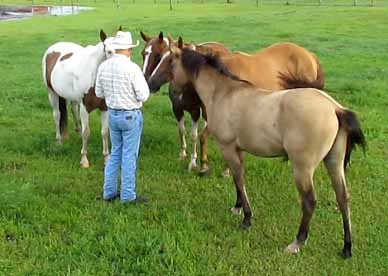
Bolo Herd
Bolo with his Herd

Trust – I could write a whole article on trust, but here’s a synopsis. I can get a horse’s respect and focus relatively quick, trust, however, cannot be forced, it has to be earned! How do we earn a horses trust? The simple answer is …. always be fair to your horse!

How do we be fair to our horses? First and foremost, be patient! Understand that you are bringing your horse into your world, not theirs! Never ever loose your temper! If you feel yourself getting frustrated STOP, regroup yourself, better educate yourself and re-approach the issue.

Next, be consistent! It is totally unfair to ask your horse to do something one way today and a different way tomorrow! How many of you have had bosses do this to you? Remember how it felt!

The most difficult things to learn are Timing and Feel. This will come with experience. Learning when to apply pressure and when to release it, in my opinion, is an art form. It requires empathy and understanding the horse. Communication is a two way street! When your horse is trying to tell you something, learn to listen!

Lastly, dedicate your self to your horse. Spend quality time with your horse! We all have jobs, social time etc., but you should never neglect your horse by not spending time with them. Horse are social beings. If you drag them out only to serve your purpose once a month, don’t expect your relationship to improve.

Just as in any relationship, with your spouse, with your kids or with anyone for that matter, there must be Respect, Focus and Trust for that relationship to grow!

Is your horse making the decisions – or are You?

I was watching an NBHA Barrel race when at the first barrel, the rider came off. To everyone’s relief, the rider was ok, but the horse continued to run the barrel pattern. To my amazement, the horse ran the complete pattern nearly perfect …. Without the rider.

I’ve seen parents put a small child on a seasoned barrel horse and let go. As the child was screaming and crying, the horse did a fine job at running the pattern.

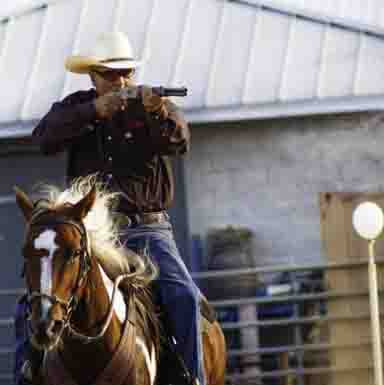
Mounted Shooting
Bolo riding Mesa in Rifle Class


I hear barrel racers say, “I need a trainer to put “The Pattern” on the horse”.  I think, ok…. in barrel racing the pattern is the same (given the left-right-right or right-left-left turns). Sooo, what if I took my mounted shooting horse to a trainer and said, “Put the pattern on my horse”. Of course, in mounted shooting, there are 40+ different courses (patterns), at least four of which are used at each competition! I would probably get a strange look from the trainer.

Buying a New Horse?

So…… you want to buy the pretty horse for your child, or maybe for yourself?  Here’s a few things to consider and some good tips.

First, ask yourself how accomplished of a horseman you are, (note, I did not say how well can you RIDE, there is a difference!) You should be honest with yourself with this question. If you are an experienced horseman, I probably won’t mention anything you don’t already know. If you are NOT experienced with horses, keep reading!

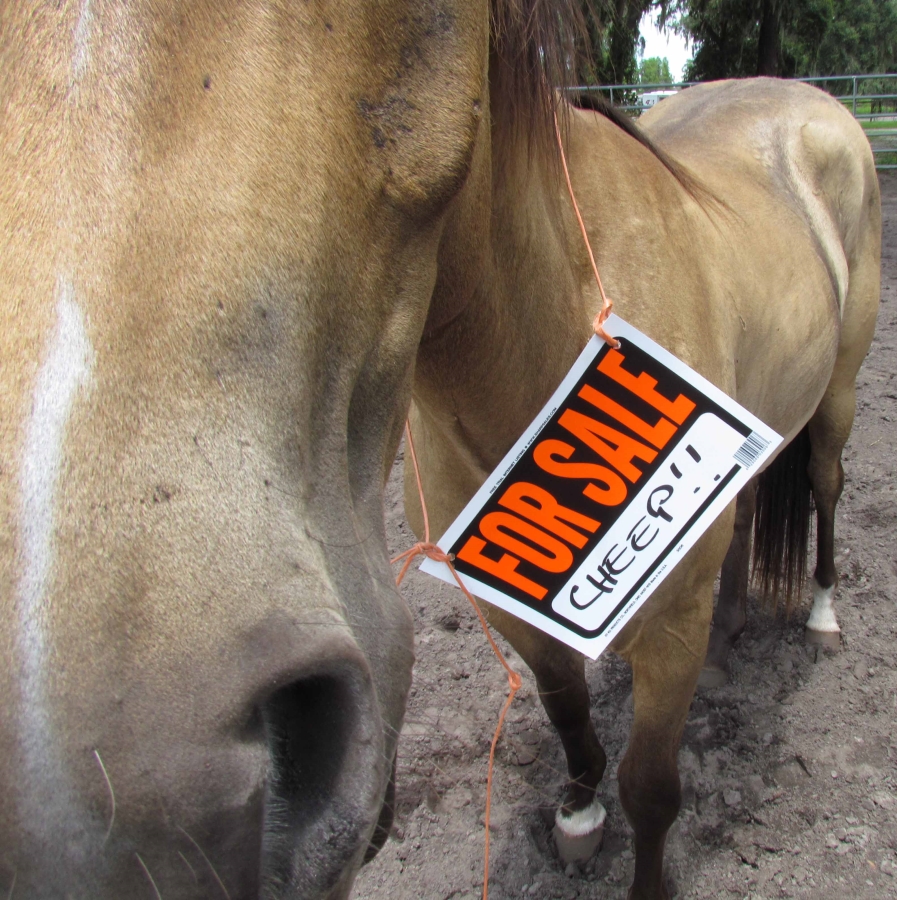
Horse for sale? Buying a new horse?

Horses are not pets! They are powerful animals that can injure and kill you by accident! A typical horse weighs in excess of 1200 lbs. This equals 400lbs per hoof that’s standing on your foot! A horse’s kick can generate 200lbs per square inch! (not sure if Kung Fu can do that) A horse’s bite is worse than any dog. A horse can knock you to the ground merely by swinging their head….well…you get my point?

Assuming now you haven’t decided to buy a cat instead and you WANT that horse, here’s some tips I hope will be helpful;

Take your time! Never rush into buying a horse! Never let anyone pressure you into buying a horse. When I decide to purchase a horse, I set aside the money (price) I want to pay, I then start looking. Be patient, the right horse for the right price will always come along.

Never buy a horse based solely on appearance! Determine if the horse fits your riding style and ability.  A nice plain sorrel horse that’s good minded is much better than a pretty paint that bucks you off!

Ask the seller to demonstrate any claims they may make as to the horse’s disposition, ability etc. If the seller refuses, keep looking!

Consider why the horse is being sold. Get as much of a background history you can and contact any previous owners if possible. Usually… the cheaper the horse, the more it’s going to cost you! There’s a reason horses are sold cheap.

Consider a short-term lease with option to buy or a thirty day return option. This gives you an opportunity to spend a little time with the horse to see if you get along and to uncover any potential issues.

Set up a pre-purchase veterinarian and chiropractic exam. Typically, the buyer would pay for this but well worth it!

Consider insurance on your horse. Yes, they have that. If your making a considerable investment, an insurance policy might make sense.

Bring a person that is experienced in equine conformation. Many times, when I was looking to buy, I would seek the help of someone more knowledgeable than I was to go with me. Another set of eyes is always good!

Seek out help with someone experienced in equine behavior. Here at Real Time Horsemanship, we offer an evaluation service designed to help the owner have a better understanding of what they have or about to acquire.

RSS
Follow by Email
YouTube
Instagram
Tiktok
URL has been copied successfully!
Verified by MonsterInsights